Wednesday, April 25, 2012

MAN DOWN!!!

OH NO! How could this happen...I blame the insanity that has been my 15 credit semester plus office hours for Human Osteology and Forensic Anthropology...I FORGOT A POST! Bad Serrin...bad bad bad Serrin!

So on with information regarding the Eucalyptus tree! I know you have been just dying for this information! :)

Ecology of the Eucalyptus:
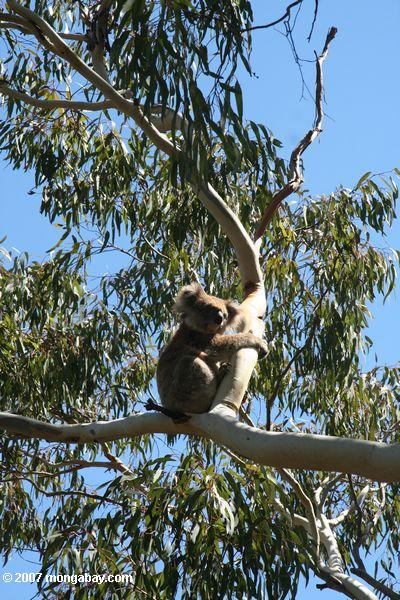
     Also known as the River Red Gum (which instantly starts a childhood song in my head...Kookaburra sits on the old gum tree, merry merry king of the bush is he...). Although it is found throughout many parts of the world, it is native to Australia. It plays an important environmental role in Australia by providing much needed shade during the months of high temperatures as well as plays a role in stabilizing river banks that otherwise would be subject to erosion.

Genetically Modified Eucalyptus:
     Benefits? The benefits to a genetically modified tree I believe are few and far between. In general however, to have a tree that had a significantly increased rate of growth could begin to assist in the regrowth process of forests.
Unfortunately I believe that there are great risks to this process as well that are specific to the Eucalyptus. For one thing, there is increased fire danger. The Eucalyptus contains a highly volatile oil.
Blue Gum trees on fire

The potential for drought increases as Eucalyptus has a deep root system that may over run the water supply available.

More importantly, Eucalyptus serves as host to a pathogenic fungus called Cryptococcus Gattii. It has been found in most recently in the Northwest and is fatal to both wildlife and humans. (I don't think I want Eucalyptus in my back yard now).
Cryptococcus Gattii


Can cost effective steps be taken to mitigate these risks?
At glance, it does not seem like it. Unless the tree can be modified to not be volitile, not use so much water, and to not harbor the fungus. Then really, what are we doing and why are we wanting to modify the Eucalyptus? Because we can? That is not a good enough reason for me.

It is my opinion that the benefits do not outweigh the risks. My suggestion, leave Eucalyptus trees in their native locations where the surrounding environment will be able to sustain and accommodate its nasty issues.

Monday, April 23, 2012

Thank You!

I just wanted to add a Thank You for Dr. Durham. You have been one of the most entertaining and knowledgeable instructors I have had during my time at FGCU. Everything you have taught me has a relevant aspect in my and my families life. I may or may not continue my blog in the future. Surprisingly it has been fun to let free my thoughts in this manner. I wish you luck in all of your future classes and I will probably see you around campus!

And with that...I leave you with this, as I believe it applies to much of our population and is something you have encouraged us NOT to do!

And all good things must come to an end...

As this semester winds down (or in my case ramps up...who the hell decided that I needed to be assigned 3 papers, 2 projects, and 4 final exams all within 3 days of each other? Eesh!) we were able to experience one last trip out of the four walls of our classroom. This time we visited Estero Island Cottage and Matanzas Pass as well as the FGCU Marine Research Facility for a little canoeing (my fav!) Besides the AMAZING sea grape jelly offered up by Jo, our 82 year old all knowing Ft. Myers Beach info bank, I was taken back by the history that comes with the area. Quality of life has changes through modern means of electricity (sweet glorious air conditioning) and through tourism which brings always needed money into the area. Visually, it has changed a lot. Bridges, canals, and constant building has changed the area. Jo spoke of a time when only one bridge took you to the island, and it was wood. She also took us back to a time when the local school had only a handful of students in it. In fact, when she was in third or fourth grade, the sixth grade classroom consisted of one, yes 1, student. Gone are those days!
One of my classmates with Jo
Other classmates on our canoeing adventure.

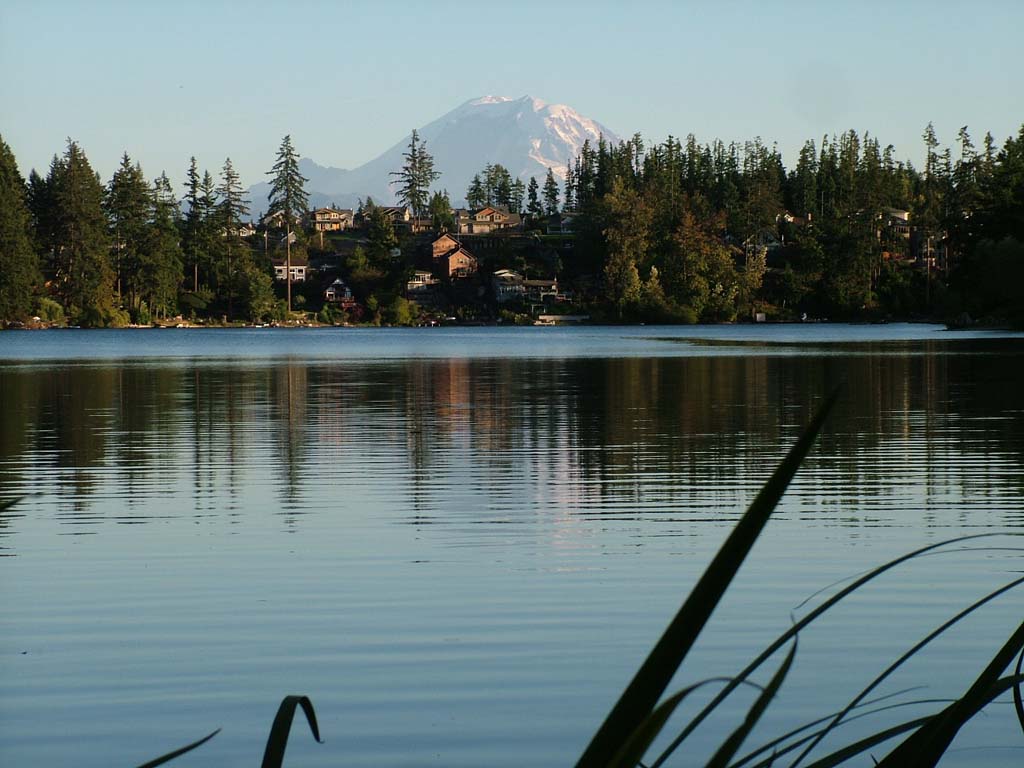
This makes me think of the neighborhood I grew up in. Until the late 1970's, it was a campground that many of the residents of Downtown Seattle visited to get away from the hustle and bustle of the city. Slowly, families began to build cabins on the camping plots, claiming permanent residence of their favorite weekend spot. By the time I was born in 1982 (a year after my parents moved in), our house was one of only 3 on the whole street. It stayed that way for years, only changing during a housing boom in the late 1990's which ate up every empty lot that housed one of my forts. While Maple Valley is still a beautiful place, it is no where near what it was during my childhood.
A well know view to residents of Maple Valley. Mt. Rainier visible from the shore around Lake Wilderness.

Sustainable Consumerism

Sustainable Consumerism you ask? An oxymoron it is not! By purchasing sustainable items as well as only purchasing items when absoutly necessary and not just when you want something new, you can find yourself to be a sustainable consumer. I myself still have a cathode ray television. Yes, I would LOVE LOVE LOVE a new 58 inch LED HD flat screen TV, but, mine still works just find and I will probably have it until it dies, just like my one before it (which I will add I had for almost 10 years before it passed through its electronic pearly gates).

When it comes to food, it is very easy these days to be a sustainable consumer. To pat my own back again here, I am a CSA farm share member of Worden Farm located in Punta Gorda, FL. They are small (80 acre) USDA Certified Organic farm run by a husband and wife team. The sell produce through multiple means. Through various farmers markets throughout Southwest Florida, a farm share box program where one new box is delivered each week full of fun produce, and the U-pick process by which you can go to the farm and pick your own box full of goodies for the week (nothing said one with your food by digging up your own potatoes!). Here is just an example of one of the box share bounty's!

Cucumber, zucchini, tomato, Florida onion, romanesco, strawberries, carrots, baby bok choi, radish, watermelon radish, swiss chard, lettuce variety and cilantro.
While I do not really pay a premium for this since it is through a small local farm, I would pay a premium for some produce that is Organic in the grocery stores. One thing you do need to watch out for however is the ever present "Natural" label. Something called "Green Washing" has occurred with these items and natural does not mean better. There are many things is our world that are natural but you sure as hell will not find me eating it! Labels are there for a reason. They need to be read and paid attention to.

One way that I choose to support local businesses as attempting to be a sustainable consumer, is that I frequent smaller "mom and pop" type markets as opposed to giant mega center, one stop shopping, places of ridiculousness. I am a huge proponent in supporting long standing, family run business. At least for me, it puts me in touch with my neighborhood. And there is just something to be said for the employees of these places remembering your name, your likes and dislikes, as well as asking and having an interest in the health and well-being of your family too.
Speaking of food...I leave you with this...
Remember me saying how we went on an amazing trip to Peru in March? Here, for your visual senses, was what my typical breakfast consisted of. Talk about being one with the land when eating! All of the fruit was picked from trees on the property of the bed and breakfast we stayed at! Damn, I miss Peru!

Saturday, April 21, 2012

Downtown Fort Myers

Ahh Downtown. When I think of this word, I imagine this:
And well, this too...
Not so much this...
Downtown Fort Myers doesn't exactly evoke the "city" feel that I am used to. I get more of a Mainstreet USA vibe from it. It is a beautiful town city, but it will never create the same emotions of downtown that I am used to. I imagine massive high rises, being able to walk anywhere and everywhere, and expansive cultural highlights.
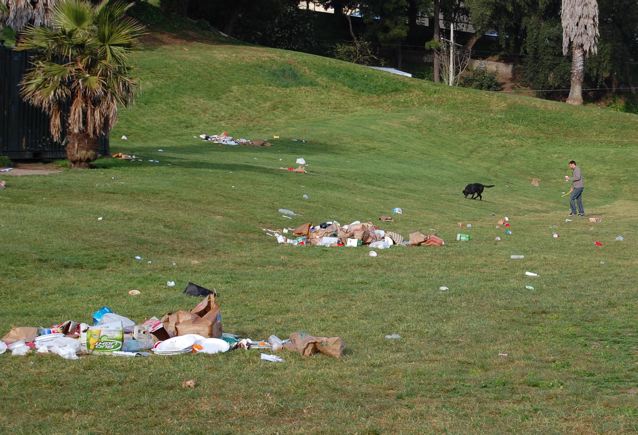
I will say that Fort Myers does seem to be attempting to improve their surroundings. Many "islands" have been planted in the streets to bring some more green to the streets. However, on one of them I did notice a "this park is maintained by (enter abc company name here)". I very much disagree that one 2'x5' piece of land constitutes a park that needs to be taken care of. But hey, they are trying. At least it doesn't look like this:
It was very interesting to venture our via foot, around downtown Fort Myers. This was a place I had never been and had never planned to visit. Again, it's not my idea of downtown, so I just assumed it would be lame. I was surprised. The 1950's architecture mixed with modern updates was a nice change. One building that I found fascinating had coral built into its construction. Nothing screams Florida like a coral foundation, right?
Another part that was unexpected was the Olympic Art Museum. Located on the waterfront, is a building housing art that has been made by Olympic athletes. I was pleasantly surprised with the work. I would buy some of them in a heart beat had things not been over $1000!
Here are some highlights in photos!


My Ecofootprint

http://www.footprintnetwork.org/en/index.php/GFN/page/calculators/
Follow that link and you too can calculate your ecofootprint!

Yes, this is my ecofootprint. And no, I am not very happy with it. I thought it would be much smaller but as someone who drives 48 miles ONE WAY to campus each day, I can understand why it is so large. If I took my driving down to just only 50 miles per week (doable if I lived within miles of campus) I could reduce my footprint to just 3.6 earths. Yes! I now have a life goal! kidding...

Is energy too cheap?

Aww, Jimmy Cardigan. Better known as Jimmy Carter, our 39th President. During his administration he was seen on television promoting energy saving practices by telling the people to turn down their thermostat and put on a sweater. Well that went over as well as a fart in church. The people viewed it as Big Brother taking over and telling them what to do. How dare the president recommend that we save some money on our electricity bill. How dare he!....Wait...what?
Well, here I go again, touting my Seattle self, telling you that Jimmy Cardigan is alive and well in our house. Although now that we are in Florida and you really can only get so naked to cool off, but we do not allow our air conditioner to go below 76 degrees F. Not only is it good to save energy, it makes for a much happier bank account!
One question has been raised, is energy too expensive? Are you kidding?!? No way! At about 11 cents per kWh, the United States is significantly below the rest of the world in energy cost. Denmark reports appropriately 40 US Cents per kWk and Tonga is approaching 58 cents. Put my current household consumption in Denmark and my monthly bill would be around 900 dollars per month.

We were to look at what energy source has the most upside potential. In my opinion, after doing some legwork, bio-fuel such as Algae (Algenol) has the best potential. Based on land usage alone, it would only take 1-2% of the current agricultural land used to produce enough Angenol to supply us at our current fuel consumption rate. That is compared to the approximate 120% needed for corn based bio-fuel alone.

Climate Change


Climate change, a word many cringe or bark at these days. Whether you believe it is a natural cycle or the ramifications of decades of industrialized destruction, it is happening. My personal belief? It is a combination of the two. Throughout the history of the earth, we can see climate changes, ice ages, periods of heat, etc. One of the things you do need to consider when conducting research on this topic however are your sources. As college students, we run to Wikipedia for basic and quick information on a topic, however if you were to hand in a research paper with Wikipedia cited, you would get a big fat 0!

One of the locations I have discovered to be a valued source for climate information is the US EPA website (http://www.epa.gov/climatechange/) Developed in 1970, the Environmental Protection Agency is charged with protecting human health and the environment. It is a wonderful go to source for fact and myths regarding climate change.

One aspect of Climate change that has a negative side is how it is portrayed in the media. It has almost become a 4-letter word among republicans who view it as a "liberal green washing" of society. And everyone from CNN, to NBC, to FOX has something to say about it. I believe we need to ignore the media and go straight to the sources for information. If you don't want to do that, then by all means get out there and do the research yourself. Just don't follow the media dogs blindly into a cesspool of fabrications.

ECHO


On February 14th, the class made a trip to ECHO (Educational Concerns for Hunger Organization). 
According to their website:
 
"ECHO exists to improve the abilities of community development workers assisting poor farmers by providing useful, important information and by networking their skills and knowledge with one another. We also provide hard-to-find beneficial food plants and seeds. ECHO understands that there is a wealth of agricultural knowledge among the poor farmers we seek to assist. As such, ECHO does not "teach" people how to farm. Rather we work to make farmers more effective at growing food-producing crops under harsh conditions." http://www.echonet.org/content/innovativeOptions

 Many parts of ECHO stand out to me. This was my 5th trip to the location as my in-laws are donors to the organization so we take tours each time they are in town. In some ways their practices are relevant to the growing "green" culture of farming practices, however, they do more to supply foreign starving nations with the ability to farm. Many practices do not have a relative need in the United States but I can see how many practices could be applied with home gardening/farming.

One of the things they discuss is something called appropriate technology. This is when technology practices, typically rudimentary compared to US practices, are employed in order to maintain farming. One instance we saw at ECHO was a hand and bike pump to irrigate the land. (seen below)


This would be a very interesting location to participate in an internship or service learning activity.
Below are some highlights of the trip!

Lettuce being grown on terracing.

Key Lime tree

Good 'ol scarecrow used to keep away unwanted birds. I find it interesting that in this world of technology, the simplest means still have a practical application.

Learning about rice. We were able to try freshly harvested raw rice. It was amazing!

Moringa

It was actually very tasty! Lots of citrus flavor.

Nutritional information for Moringa. I have decided I need to grow this!

What most of the farm looks like. Not the pretty linear farms we are used to seeing but pretty does not always mean better!

Cranberry Hibiscus. Another plant I need to grow. The leaves demand to be eaten! Really sweet!

Our littler caterpillar buddy found along the path.